
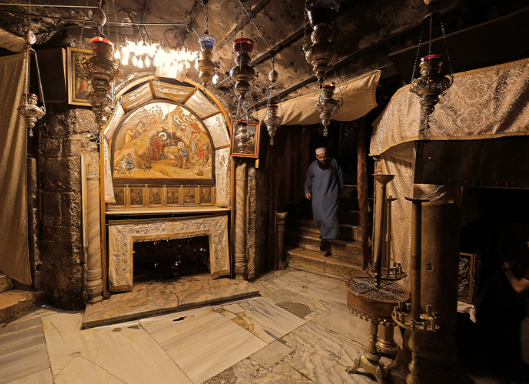
The birthplace of Jesus is a subject of significant historical and theological interest. Once widely debated, it has become established in Christian tradition that Jesus was born in Bethlehem, a small town located in the West Bank. This blog post will explore the significance, historical context, and archaeological evidence surrounding the birthplace of Jesus.
1. The Historical Context of Bethlehem
Bethlehem, known as “House of Bread” in Hebrew, is a small town located about six miles south of Jerusalem. Historically, it was a notable site, as it was the birthplace of King David, a crucial figure in Jewish history. This connection adds to the significance of Jesus’s birth in Bethlehem, as the Gospels link his lineage to David, fulfilling Old Testament prophecies that the Messiah would come from this notable line.
Moreover, during the time of Jesus’s birth, Bethlehem was under Roman rule. According to the Gospel of Luke, Mary and Joseph traveled to Bethlehem to register for a census decreed by Emperor Augustus. This census was significant because it demonstrates how local governance was intertwined with Roman political power, and it sets the stage for the fulfillment of prophecies concerning the Messiah’s birthplace as foretold in Micah 5:2.
-
- Research the geographical importance of Bethlehem in connection to Jerusalem.
-
- Explore Old Testament prophecies and their relevance to New Testament accounts.
-
- Understand the political climate under Roman rule during Jesus’s life.
-
- Learn about King David’s significance and how it relates to Jesus.
2. Archaeological Evidence of Jesus’s Birthplace
In the 4th century AD, a church marking the traditional site of Jesus’s birth was constructed in Bethlehem. Today, the Church of the Nativity stands over this ancient location and is considered one of the oldest continuously operating churches in the world. Archaeological studies conducted in and around the church suggest strong evidence that this may indeed be the place where Jesus was born. The site contains a cave, which according to local tradition, served as the stable for Mary and Joseph.
Recent excavations have uncovered various artifacts, including pottery and coins, dating back to the 1st century AD. These findings bolster the argument that Bethlehem was inhabited at the time of Jesus’s birth and confirm the existence of structures that could have been used for agricultural and residential purposes. Such evidence helps us understand the living conditions during that period and the community dynamics of early Judeo-Christian societies.
-
- Visit the Church of the Nativity to see the historical claims first-hand.
-
- Read up on the archaeological reports related to the site.
-
- Participate in guided tours focusing on the historical significance of Bethlehem.
-
- Explore online databases for archaeological findings in the region.
3. The Theological Implications of Jesus’s Birthplace
The significance of Jesus’s birthplace goes beyond historical context; it embodies deep theological themes central to Christianity. The Gospels portray Jesus as the humble Messiah, born in a stable rather than a palace, emphasizing his accessibility to the poor and marginalized. This humble start sets the tone for his entire ministry, which focused on love, compassion, and service.
Moreover, the prophecy that the Messiah would be born in Bethlehem emphasizes that Jesus meets the expectations set forth in Jewish scripture. This fulfills the long-awaited hopes of the Jewish people and illustrates the continuity between the Old and New Testaments. The events surrounding his birth, including the visit of the Magi and the shepherds, further reflect the universal appeal and divine mission of Jesus.
-
- Study New Testament passages that reference Jesus’s birth and its significance.
-
- Reflect on the humility demonstrated by Jesus’s birth circumstances.
-
- Discuss the implications of Bethlehem as a central theme in Christian theology.
-
- Engage with others in discussions about the significance of Jesus’s early life.
In conclusion, the birthplace of Jesus in Bethlehem is rich with historical, archaeological, and theological significance. Understanding where Jesus was born not only bolsters our knowledge of biblical narratives but also deepens our appreciation for the broader implications of his life and teachings. For those seeking to explore this topic further, consider delving into biblical texts, visiting historical sites, or engaging with a community study group.