
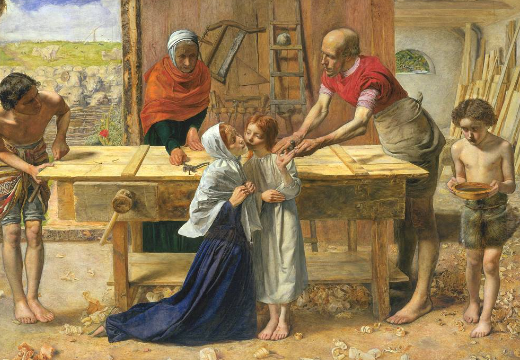
While the life of Jesus is well-documented from his birth to his ministry, there exists a significant gap in records known as the “hidden years” of Jesus. This period, which spans from his childhood to the start of his public ministry at around age 30, raises intriguing questions about his early life and the development of his teachings.
1. The Context of the Hidden Years
The hidden years of Jesus refer to the time between his early childhood, described in the Gospels, and the beginning of his public ministry. This period, mainly depicted in the Gospel of Luke, is largely devoid of concrete historical details. The last definitive account of Jesus’ youth appears when he is twelve years old, discussing theological matters in the temple in Jerusalem. Following this event, the Scriptures remain silent about the next eighteen years.
This absence of information has led to much speculation. Scholars and theologians have pondered where Jesus lived, what he did, and how he grew in wisdom and stature during this time. Some suggest that he may have worked as a carpenter alongside his father, Joseph, while others believe he studied religious scriptures deeply. The lack of records invites both questions and creative reflections about his early influences.
-
- Research historical documents or texts regarding Jewish culture in first-century Palestine.
-
- Investigate the Life of Joseph and Mary for context on Jesus’ upbringing.
-
- Explore religious teachings in Jewish synagogues during Jesus’ early years.
-
- Consider societal influences that may have shaped his views and philosophy.
2. Historical Accounts and Theories
Though the Bible does not provide specific details about these years, various historical accounts and theories attempt to fill in the gaps. Some propose that Jesus may have traveled beyond Judea during his youth, possibly to Egypt or India, which might have exposed him to different philosophical and spiritual teachings. Proponents of this theory often cite similarities between Jesus’ teachings and those found in Eastern religions.
Additionally, many scholars focus on the cultural and societal influences that took place in Judea during Jesus’ youth. As the region was undergoing significant social, political, and religious changes, these factors likely contributed to shaping Jesus’ worldview. His family’s humble beginnings and the hardships they faced may have also influenced his later teachings about compassion and community.
-
- Explore the theory of Jesus’ travels and what communities he could have interacted with.
-
- Look into Jewish historians of the time, such as Flavius Josephus, for insights.
-
- Study how the socio-political environment of the era affected religious beliefs.
-
- Compare Jesus’ teachings with those from other philosophical traditions.
3. The Impact of the Hidden Years on His Ministry
The hidden years not only contributed to Jesus’ personal growth but also laid the foundation for his ministry. The values and principles he likely cultivated during this time—empathy, justice, and humility—became cornerstones of his public teachings. The silent years may have also provided him the opportunity to intimately observe human behavior, dedication, and the struggles faced by ordinary people.
Moreover, this time allowed Jesus to develop his understanding of the Hebrew Scriptures, which would become critical during his public addresses. His articulations during the Sermon on the Mount reflect insights that likely matured through years of observation, meditation, and perhaps even discussions within his family and local community.
-
- Reflect on how early life experiences shape one’s professional values.
-
- Consider keeping a journal to track personal growth and influences.
-
- Engage in community service for real-world perspectives on compassion and empathy.
-
- Read religious texts to better understand their historical context and relevance.
In conclusion, the hidden years of Jesus, though largely unexplored, hold significant importance in understanding his life and ministry. Investigating this period can provide valuable lessons about personal growth and the influences that shape us. Whether through historical research or personal reflection, embracing these insights offers abundant opportunities for self-discovery and understanding our own journeys.